Are Bernedoodles Easy to Train? Temperament and Trainability FAQ
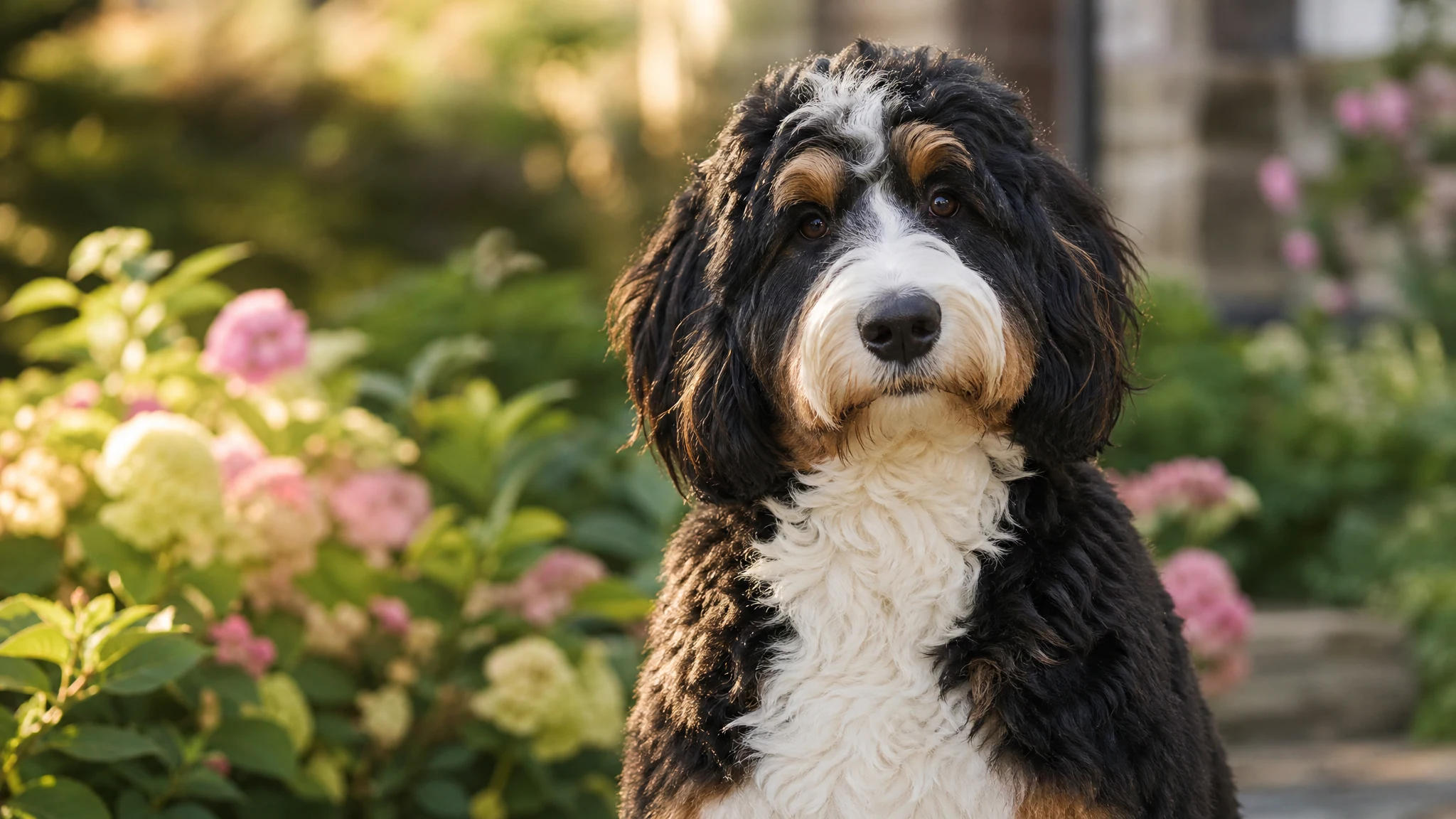
General training information. Every dog is an individual; for health or behavior concerns, see your veterinarian.
Bernedoodles are a cross of the Bernese Mountain Dog and the Poodle, and people often ask whether that mix makes life easy. The honest answer is mostly yes, with some real caveats. Here are the questions owners ask most, grouped by theme.
Trainability and Intelligence
Are Bernedoodles easy to train?
Canine Bible describes them as quick to learn and eager to please, though they can be a little independent. They respond well to positive reinforcement and consistency. Most owners find them workable, but easy still means showing up every day.
Are Bernedoodles smart?
The cross was bred to pair the Bernese Mountain Dog's gentleness with the Poodle's intelligence, according to Canine Bible. The Poodle Club of America's standard describes the Poodle as very active and intelligent. Each Bernedoodle is an individual, so intelligence in a given dog can vary.
What does Bernedoodle trainability really look like day to day?
PetMD recommends consistent, structured training with short, upbeat sessions. Think five to ten minutes of practice a few times a day, not one long drill. Ending on a success keeps a willing dog willing.
Is there an official trainability rating for the breed?
No. The AKC does not recognize the Bernedoodle as a breed, so there is no AKC trait rating and no official breed standard. The numbers and descriptions you see come from vet-education and pet-care sites, and they do not always agree. Treat any rating as a general picture, not a promise.
Do Bernedoodles need a certain kind of training?
PetMD and Purina New Zealand both advise positive, reward-based training. Purina notes that both parent breeds are owner-oriented, which is why rewards and praise tend to land well. This matches the approach recommended by the American Veterinary Society of Animal Behavior (AVSAB). Our complete Bernedoodle training guide walks through the steps.
Can they be stubborn?
Canine Bible says they can be a little independent. In practice that usually means a dog who thinks about a cue before doing it, especially when something more interesting is nearby. Better rewards, shorter sessions and calmer settings help more than repeating yourself louder.
Temperament
What is the Bernedoodle temperament like?
PetMD describes them as loving, kind, goofy, playful and gentle. That fits the family-companion purpose they were bred for. Remember there is no breed standard, so individual dogs vary.
Is temperament predictable?
Only partly. PetMD says temperament is more predictable in first-cross (F1) dogs from well-tempered parents. Purina New Zealand adds that the cross can inherit either parent's temperament, so energy and personality can be hard to predict. Meeting the parents, when possible, tells you more than any breed description.
What do the parent breeds contribute?
The Bernese Mountain Dog Club of America breed standard calls the Bernese self-confident, alert and good-natured, never sharp or shy. The Poodle standard describes a very active, intelligent dog with an air of distinction. Your dog may lean toward either side or blend both.
Are Bernedoodles good with children?
Canine Bible says they are generally gentle and patient with children. It also advises supervision around very young kids because of the dog's size. A friendly dog can still knock over a toddler by accident.
Do they get along with other pets?
PetMD says they enjoy other dogs and are gentle with smaller pets such as cats. Good early introductions and calm, rewarded meetings still matter. Every dog needs to learn manners around other animals.
Energy, Barking and Common Challenges
How much energy do Bernedoodles have?
Sources split a little. Canine Bible calls them moderately active, enjoying daily walks and play, and more laid-back indoors. Zoetis Petcare describes them as high-energy. Plan for real daily exercise and expect your own dog to land somewhere in that range.
How much exercise do they need?
Chewy says about an hour a day. PetMD suggests at least two walks a day plus mental work such as games, snuffle mats and puzzle toys. Purina New Zealand suggests one to two hours of walking, in short sessions spread through the day.
Do Bernedoodles bark a lot?
The sources conflict. Canine Bible says moderate barking, to alert or when excited, while PetMD says they tend to be quiet. Chewy warns that a lack of exercise can lead to nuisance barking. Exercise and enrichment are your best tools.
Do they get separation anxiety?
Chewy and Canine Bible both say they can. Chewy notes they may be sad if left for extended periods and suggests crate training and interactive toys. Build alone time in small, calm steps from the first week. If distress is intense, talk to your veterinarian.
What other behavior problems should I expect?
Purina New Zealand says jumping up and pulling on the lead need early training. Canine Bible lists chewing, barking and restlessness as boredom behaviors when daily exercise is missing. PetMD advises starting leash training right away and teaching your dog not to jump up. Most of these are prevention jobs.
Does coat care affect training?
Yes, indirectly. PetMD and Canine Bible both say regular grooming is needed to prevent matting. A puppy who learns to relax on a grooming table, with treats, makes the whole routine easier. Practice handling brushes, paws and ears early.
Who the Breed Suits
Are Bernedoodles good for first-time owners?
They can be, if you are ready for daily exercise, grooming and consistent training. The eager-to-please nature helps, but their size, coat care and need for company are real commitments. A first-time owner who enjoys routine and uses reward-based methods is a good fit.
Who might struggle with one?
People away from home for long stretches may face separation anxiety and boredom behaviors. Those who cannot manage daily walks or regular brushing may also have trouble. Standard-sized dogs also need space and strength to handle on a lead.
Does size change how hard training is?
Size varies by the Poodle used in the cross. PetMD says Standards reach up to 29 inches, Minis up to 22 inches and Toys 12 to 17 inches. Chewy lists weights of under 20 pounds for Toy, 20 to 45 for Miniature and 46 to 100 for Standard. A bigger dog makes pulling and jumping more important to fix early.
Common Myths
Myth: Bernedoodles train themselves because they are smart.
Smart dogs learn quickly, but that includes bad habits. Without structure, a clever puppy can learn that jumping gets attention. Teach what you want and reward it.
Myth: They are always calm and low-shedding.
PetMD says shedding is low to moderate and that coats resembling the Bernese parent may shed more. It also says hypoallergenic claims are not guaranteed. Energy varies as well, as Purina New Zealand notes.
Myth: A hybrid is automatically healthier.
The Bernese Mountain Dog Club of America says crossbred dogs can carry the genetic diseases of both parent breeds. It also opposes deliberately crossing Bernese with other breeds, which is the club's stated position. Ask breeders about health screening of both parents, and take health questions to your veterinarian.
Bernedoodles are affectionate and usually willing learners, but they reward owners who plan ahead. Start early, keep sessions short, and match exercise to your dog. For a full step-by-step plan, see the complete guide to training a Bernedoodle.
Sources
- Canine Bible, Bernedoodle
- PetMD, Bernedoodle
- Chewy breed education, Bernedoodle
- Purina New Zealand breed library, Bernedoodle
- Zoetis Petcare breed explorer, Bernedoodle
- Bernese Mountain Dog Club of America, Breed Standard
- Bernese Mountain Dog Club of America, Position on Crossbreeding
- Poodle Club of America