How to Potty Train a Bernedoodle Puppy
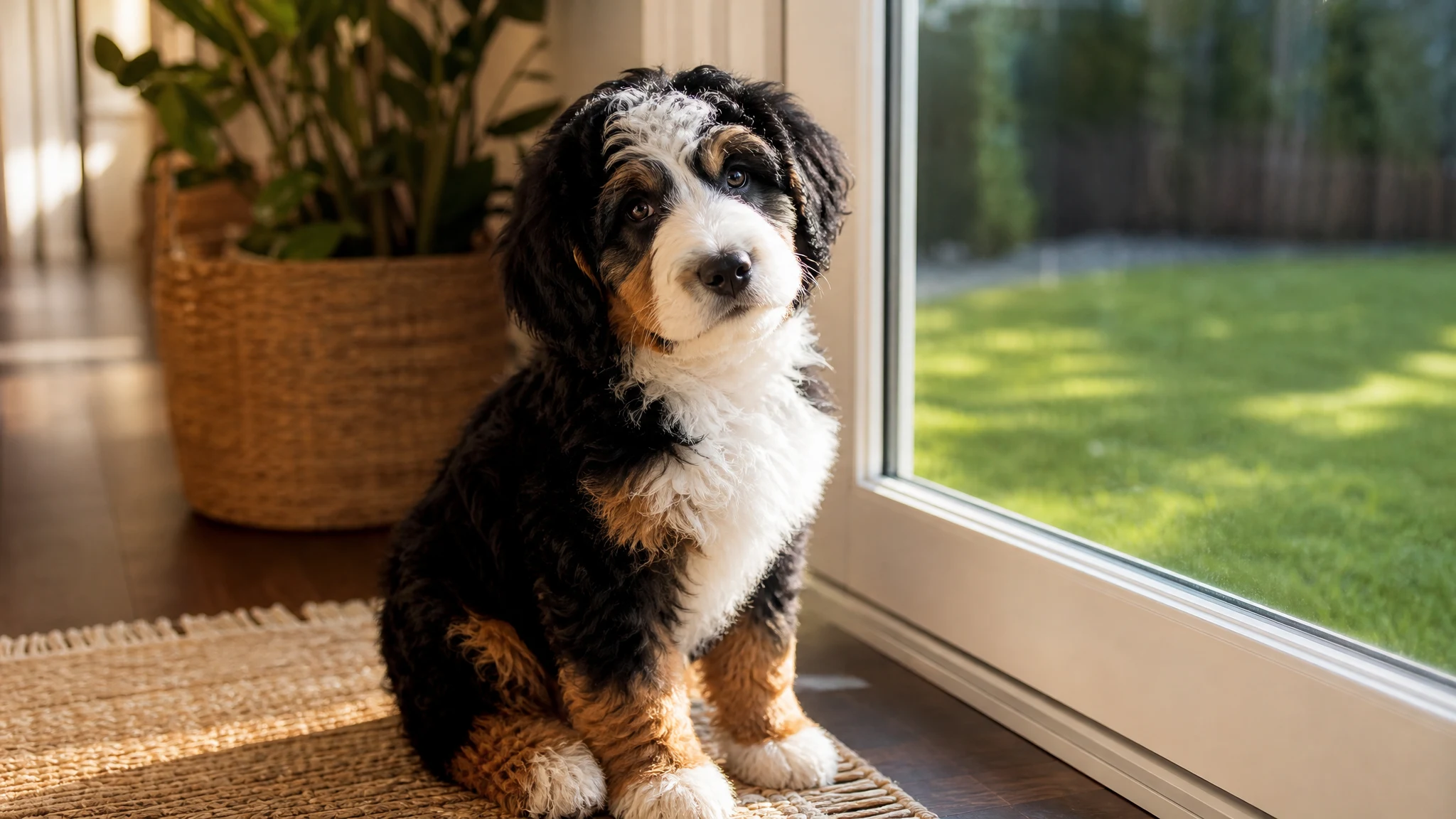
General training information. Every dog is an individual; for health or behavior concerns, see your veterinarian.
Bernedoodle potty training comes down to a predictable routine, quick rewards and a lot of patience. The method is the same for most puppies. What changes is how you fit it to your dog's size, personality and your household.
This guide walks through house training a Bernedoodle step by step, from the supplies to the first accident to what progress may look like. If you want the bigger picture of raising this crossbreed, start with our complete guide to training a Bernedoodle.
What to Know About the Breed First
The Bernedoodle is a mix of Bernese Mountain Dog and Poodle, according to the Zoetis Petcare breed explorer. There is no official breed standard, so individual dogs vary a lot.
Size is the biggest variable. PetMD notes that height depends on which Poodle size was used: Standard dogs can reach up to 29 inches, Minis up to 22 inches and Toys 12 to 17 inches. Chewy lists weight as under 20 pounds for Toy, 20 to 45 pounds for Miniature and 46 to 100 pounds for Standard.
Why does that matter for potty training? A Toy and a Standard are very different dogs to manage. A big puppy is harder to carry outside in a hurry and leaves bigger messes to clean up. How long any puppy can wait between trips varies from dog to dog, so use the schedule below as a starting point and adjust to your own puppy. Your veterinarian can help if you are unsure.
On temperament, Canine Bible describes the Bernedoodle as quick to learn and eager to please, but sometimes a little independent. It responds to positive reinforcement and consistency. Purina New Zealand adds that both parent breeds are owner-oriented, so reward-based training suits them. That is good news for house training, because rewards and routine are the whole game.
Materials You Will Need
- A crate sized so your puppy can stand, turn around and lie down. For a Standard Bernedoodle, you may need a larger crate or one with a divider so you can adjust the space as your puppy grows.
- A leash and collar or harness for every outdoor trip, even into a fenced yard. It keeps the trip focused on business.
- Small, soft treats your puppy loves. Keep them in a pouch near the door so you can reward within a second or two.
- An enzyme-based cleaner made for pet messes. Plain household cleaners can leave a scent that may draw your puppy back to the same spot.
- A chosen potty spot outside, ideally the same patch each time.
- A notebook or phone app to log meals, naps, potty trips and accidents.
- A baby gate or exercise pen to limit access to the rest of the house while your puppy learns.
- Chew toys and puzzle toys to keep your puppy busy in the crate or pen.
How to Potty Train a Bernedoodle: Step by Step
Step 1: Pick a spot and a cue word
Choose one outdoor area for potty trips. Walk your puppy there on leash each time. Dogs tend to return to places that smell like earlier trips, so a consistent spot helps.
Pick a short cue such as "go potty" and say it calmly as your puppy begins to go. Do not repeat it over and over. Over time the cue may help you prompt a trip when you are short on time.
Step 2: Build a schedule around your puppy's day
Puppies need to go out often. A schedule takes the guesswork out and prevents most accidents before they happen. Take your puppy out:
- First thing in the morning, right out of the crate
- After every meal
- After every nap
- After a play session or a burst of excitement
- Before bed
- Any time you see sniffing in circles, whining, pacing or heading to a corner
PetMD says puppies eat three to four meals a day, and Standard puppies should eat a large-breed puppy food. Feeding at set times makes potty times easier to predict. Ask your veterinarian about the right food and amounts for your puppy.
Early on, plan on trips every couple of hours while your puppy is awake, then stretch the gap as your puppy shows it can wait. Your puppy's own signals matter more than any clock. If accidents start happening, you have stretched the gap too fast, so go back a step.
Step 3: Go out with your puppy and stay boring
Walk your puppy to the spot, stand still and wait. Do not play or chat. A minute or two of quiet sniffing is usually enough to begin. If nothing happens after a few minutes, go back inside, put your puppy in the crate or pen for a short while and try again.
This "no potty, no play" approach teaches your puppy that outside time is for business first. Play comes after.
Step 4: Reward right away
The moment your puppy finishes, deliver a treat and calm praise. Timing is everything. If you wait until you are back at the door, your puppy may not connect the reward to the act of going outside.
Then add a short walk or play session as a bonus. This keeps your puppy from learning that finishing quickly ends the fun, which can lead to a puppy who holds it in outside and goes inside later.
Step 5: Use the crate as a tool
Crate use works because most puppies avoid soiling the place where they sleep. The crate is not a punishment and it is not a place to leave a puppy for long stretches. Use it for naps, overnight sleep and short periods when you cannot watch your puppy.
Make the crate welcoming. Feed some meals in there, toss in treats and offer a safe chew toy. Take your puppy straight outside when you open the door.
Overnight, a young puppy may need a trip out during the night. Keep it quiet and dull: no play, low lights, straight back to bed. Chewy mentions that Bernedoodles can develop separation anxiety and may be sad if left for extended periods, and suggests crate training and interactive toys. If your puppy cries hard, panics or tries to injure itself in the crate, stop and talk to your veterinarian or a reward-based trainer rather than pushing through.
Step 6: Supervise when your puppy is loose
When your puppy is out of the crate indoors, keep it where you can see it. Use a gate, a pen or a leash tied to your belt. Most house accidents happen when a puppy is wandering unwatched.
If you cannot supervise, the puppy goes in the crate or pen with a toy. This is not forever. Freedom grows as your puppy proves it can hold on.
Step 7: Handle accidents calmly
Accidents will happen. They are part of how puppies learn. How you respond matters.
- If you catch it happening: make a brief, neutral noise to interrupt, then calmly scoop up or lead your puppy outside. Reward if your puppy finishes there.
- If you find it later: clean it up with an enzyme cleaner and say nothing to your puppy. Puppies cannot connect a scolding to something that happened minutes ago.
Never punish a puppy for an accident. That means no yelling, no rubbing a nose in the mess and no physical corrections. The American Veterinary Society of Animal Behavior (AVSAB) supports reward-based training, and punishment can make a puppy fearful and sneaky about where it goes, which makes house training harder.
Ask yourself why it happened. Was the gap too long? Was the puppy unsupervised? Did you miss a signal after a nap? Adjust the plan, not the puppy.
Step 8: Keep it up and expand freedom slowly
When your puppy goes several days without an accident, you can open up a little more space or lengthen the gap between trips. Do it one small change at a time. If accidents return, go back to the earlier routine for a while.
Keep rewarding outdoor potty trips even after the habit looks solid. It costs you very little and helps keep the habit strong.
Breed-Specific Tips for Bernedoodle Potty Training
Match the plan to the size
A Toy or Mini may need more frequent trips and may be easy to carry out. A Standard is a big dog in the making, so get leash manners and the outdoor routine in place early. Purina New Zealand lists jumping up and pulling on the lead as challenges that need early training, and PetMD recommends starting leash training immediately and teaching not to jump up. Both fit well with potty trips, since every trip is a leash practice.
Expect some independence
Canine Bible says the breed can be a little independent. If your puppy ignores the potty spot and wants to explore, stay patient. Keep trips short and dull, and save the fun for after. Short, upbeat sessions work best, according to PetMD.
Keep up with exercise
Chewy suggests about an hour of exercise a day, and PetMD suggests at least two walks a day plus mental games like snuffle mats and puzzle toys. Purina New Zealand advises short sessions spread through the day to protect growing bones and joints. Extra potty chances during these outings are a bonus. A bored puppy may also chew, bark or get restless, as Canine Bible and Chewy note, and that can make house training feel harder than it is.
Plan for alone time early
Because separation anxiety is listed as a possible challenge by Chewy and Canine Bible, practice short absences from the start. Leave for a few minutes, return calmly and build up slowly. Accidents that only happen when you are gone may point to stress rather than a training gap. Your veterinarian can help you sort that out.
Watch the coat
Long hair around the back end can get soiled and tangled. PetMD says regular grooming is needed to prevent matting. Ask a groomer about keeping the sanitary area trimmed and clean.
Common Mistakes to Avoid
- Giving too much freedom too soon. A puppy loose in the house is a puppy about to have an accident.
- Punishing accidents. It teaches fear, not where to go.
- Skipping the leash. Without it, outdoor trips turn into play and the point gets lost.
- Rewarding late. Treat within a second or two of finishing.
- Using weak cleanup products. Leftover scent may invite repeat accidents.
- Changing the routine every few days. Consistency is what this breed responds to, as Canine Bible notes.
- Leaving a puppy in the crate too long. A puppy that must soil its bed may lose the habit of keeping it clean.
- Comparing your puppy to someone else's. Dogs differ, and a mixed breed with no standard varies even more.
How Long Does It Take? What to Expect
There is no single timeline. We did not find a reliable breed-specific figure for how long Bernedoodle house training takes, so check with your veterinarian or a reward-based trainer for guidance on your own puppy. Timing varies with age when you start, size, consistency in the household and the individual dog.
With a steady routine, many owners see fewer accidents over the first several weeks. Some puppies may still have slips for months, especially during growth spurts, changes in routine or excitement. That is normal for many puppies, and it does not mean your dog is failing.
A realistic goal is steady progress: longer stretches between accidents, a puppy who heads to the door or signals, and a routine you both understand. Results cannot be promised, since every dog is different.
If your puppy suddenly starts having accidents after doing well, or seems to strain, go very often, or drink much more than usual, call your veterinarian. Those can be health signs, and only a vet can say what is going on.
A Sample Day to Adapt
- Wake up: straight outside on leash, reward after the puppy goes.
- Breakfast, then outside again.
- Short play or training, then outside, then crate or pen for a nap.
- Wake from nap: outside right away.
- Repeat the pattern through the day, with meals, play, naps and trips out.
- Evening: last meal at a set time, a calm walk, then a final trip out before bed.
- Overnight: quiet trip out if your puppy wakes and needs it, then straight back to bed.
Adjust the times to fit your puppy's feeding plan and your veterinarian's advice.
Final Thoughts
Potty training a Bernedoodle puppy rewards the owner who stays consistent. Keep trips frequent, rewards fast and accidents low-key. Be honest about your puppy's size and personality, and adjust as you go. Once the basics are in place, you can move on to the rest of your puppy's training in our complete Bernedoodle training guide.
Sources
- Zoetis Petcare breed explorer: Bernedoodle
- PetMD: Bernedoodle
- Chewy breed education: Bernedoodle
- Canine Bible: Bernedoodle
- Purina New Zealand breed library: Bernedoodle