Leash Training a Bernedoodle: Pulling, Lunging and Loose-Leash Walking
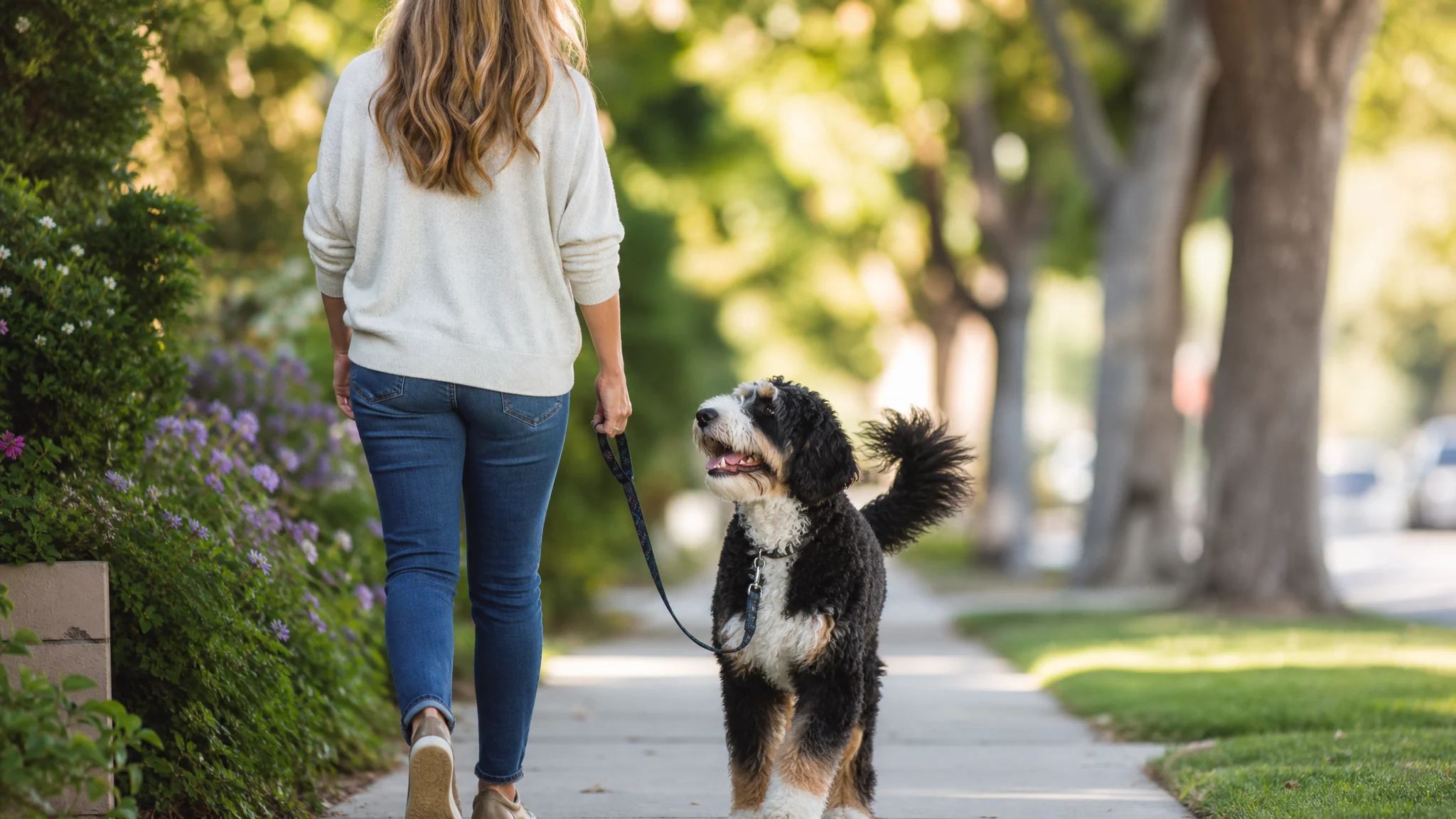
General training information. Every dog is an individual; for health or behavior concerns, see your veterinarian.
A Bernedoodle can weigh anywhere from under 20 pounds to around 100, so a dog that drags you down the sidewalk is a real problem for some families. The good news is that Bernedoodle leash training is very doable with patience, good timing and a pocket full of treats.
This guide shows you how to leash train a Bernedoodle step by step, what gear to use, and what to do when your dog pulls or lunges. For the wider picture, see our complete guide to training a Bernedoodle.
Why Bernedoodles Pull on the Leash
Pulling is not stubbornness or disrespect. Walking forward gets a dog where it wants to go, so pulling works. Every time the leash is tight and you keep walking, the dog learns that tension pays off.
Some breed background helps explain the picture. Canine Bible describes the Bernedoodle as quick to learn and eager to please, but also a little independent. Purina New Zealand notes that jumping up and pulling on the lead need early training in this cross.
Energy is the other piece. Sources disagree here. Canine Bible calls the breed moderately active, Zoetis Petcare describes them as high-energy, and Purina New Zealand says activity level is hard to predict because the cross can inherit either parent's temperament. Your dog may be calmer or livelier than the average, so watch the individual.
The parent breeds were not bred for chasing or herding. The Bernese Mountain Dog Club of America says the Bernese was a farm companion and watchdog in Switzerland, and not a herding dog for sheep and goats. The sources we relied on do not give a prey drive or herding rating for the Bernedoodle, so do not assume one. Watch your own dog and notice what makes it surge ahead: squirrels, other dogs, smells or simple excitement.
Under-exercised dogs also tend to pull harder. Chewy says Bernedoodles need about an hour of exercise a day, and PetMD suggests at least two walks a day plus mental games. A dog that has had little outlet will arrive at the leash already wound up.
Materials You Need
- A flat collar that fits snugly, with room for two fingers underneath. Use it for ID tags.
- A front-clip harness with the leash ring on the chest. It turns the dog gently sideways when it pulls, instead of letting it lean into the pressure. Many owners find it helpful for a strong dog.
- A standard 4 to 6 foot leash. Skip retractable leashes while training, because they teach a dog that pulling extends the leash.
- Small, soft, high-value treats that your dog can swallow quickly, cut pea-sized for larger dogs.
- A treat pouch so rewards are always at hand.
- A clicker or a marker word such as "yes" (optional).
What not to use: prong, choke and shock collars. They work by causing discomfort, and the American Veterinary Society of Animal Behavior (AVSAB) supports humane, reward-based training instead. They can also make a dog link pain with whatever it was looking at, which can make lunging worse.
How to Leash Train a Bernedoodle: Step by Step
Step 1: Get comfortable with the gear
Let your dog sniff the collar, harness and leash. Put each on for a few minutes indoors while you hand out treats, then take it off. The goal is for your dog to think "harness means good things." Start this on day one, as PetMD recommends starting leash training immediately.
Step 2: Teach attention indoors
Say your dog's name or a cue like "look." The moment your dog turns toward you, mark it and give a treat. Repeat in short rounds. PetMD recommends short, upbeat sessions, and for puppies Purina New Zealand advises short periods of activity several times a day to protect growing bones and joints. Three or four minutes at a time is plenty.
Step 3: Reward position beside you
Choose the side you want your dog on and keep it consistent. With your dog on leash in the house or yard, drop a treat or hand one down at your hip each time your dog is in that spot. Take a step, reward, take another step, reward. Your dog starts to learn that the best things happen beside your leg.
Step 4: Practice in a boring place
Move to the driveway, backyard or a quiet cul-de-sac. Walk a few steps and reward often, every one to three steps at first. Keep the leash in a relaxed "J" shape. If the leash stays loose, the treat comes. You are paying for the slack, not for walking quickly.
Step 5: Stop when the leash gets tight
When your dog reaches the end of the leash and pulls, stop moving. Stand still, keep your hands quiet, and wait. As soon as the leash loosens or your dog glances back, mark it, reward it, and walk on. If your dog keeps pulling, turn and walk the other way, then reward the dog for catching up.
This is not a punishment. It simply teaches that a tight leash means the walk stops, and a loose leash means the walk goes on.
Step 6: Add distance and distractions slowly
Once your dog walks nicely in the yard, take it to the sidewalk, then a busier street. Expect to go back to rewarding every few steps in each new place. This is normal. Dogs do not automatically carry skills to new settings.
Step 7: Fade the treats
As your dog gets better, reward every five steps, then every ten, and then at random times. Keep rewarding with other things your dog loves, such as sniffing a good bush or greeting a friend, as a "yes, go sniff" release. Keep a treat or two in your pouch for tougher moments.
Loose-Leash Games to Build the Habit
Games keep sessions fun for a smart dog and add practice without feeling like drilling. Try these a few minutes at a time.
- Treat scatter: Toss a few treats on the ground and let your dog sniff them out, then call your dog back to your side and reward. This teaches that the ground is a reward for staying close.
- Direction changes: Walk, then turn suddenly. Reward your dog for following you. This keeps your dog watching you instead of the horizon.
- Stop and sit: Every time you stop, ask your dog to sit and reward it. Your dog starts to stop with you automatically.
- Red light, green light: Walk, freeze, then walk again. A tight leash means "red light."
- Sniff breaks: Pick a spot and say "go sniff." The walk becomes a trade, with loose-leash walking earning time to explore.
Mental work also helps. PetMD suggests games, snuffle mats and puzzle toys. A dog that has used its brain before the walk can be easier to handle on it.
What to Do About Lunging at Triggers
Lunging is different from ordinary pulling. A dog lunges at something it sees, often another dog, a person, a bike or an animal. The cause may be excitement, frustration or fear, and it can look the same from the outside. PetMD says Bernedoodles generally enjoy other dogs, but individual dogs vary.
Try this approach:
- Find your dog's threshold. This is the distance at which your dog notices the trigger but can still take a treat and respond to you.
- Stay under it. Cross the street or step behind a parked car before your dog reaches its limit.
- Reward calm looks. When your dog sees the trigger and stays calm, mark it and give a treat. The trigger then predicts good things.
- Move away calmly. If your dog begins to react, turn around and walk off with a happy voice. Do not yank the leash.
- Close the distance a little at a time. Over days and weeks, you can work a bit closer, as long as your dog stays relaxed.
Do not scold or jerk the leash. This can add stress and make your dog connect the trigger with something unpleasant. If lunging includes growling, snapping or signs of fear, or if it has started suddenly, ask your veterinarian to rule out pain or other health causes. They may also refer you to a qualified trainer who uses reward-based methods. We cannot diagnose a dog from an article.
Tips for Better Walks
- Exercise first. A short play session or sniff in the yard before the real walk can take the edge off.
- Keep sessions short and upbeat. PetMD recommends short, upbeat sessions, and consistency matters more than length.
- Be consistent as a family. Everyone should use the same cues and rules. Canine Bible says consistency is key for this breed.
- Use your voice. A cheerful tone keeps your dog engaged better than a nagging one.
- Watch your own body. Many people tighten the leash or rush when they see a trigger. Breathe, relax your arm and keep walking.
- Mind the coat. PetMD and Canine Bible both note that Bernedoodle coats need regular grooming to prevent matting. Check under the harness straps and behind the legs for tangles.
- Protect growing joints. Puppies do better with short outings spread through the day than one long march, per Purina New Zealand.
Common Mistakes to Avoid
- Moving forward on a tight leash. Every step you take while your dog pulls rewards the pulling.
- Skipping rewards because your dog "knows it." Pay well while your dog is still learning, and thin treats out gradually.
- Training only when you are tired or late. Short, calm sessions at a good time of day work better than a rushed one.
- Going to hard places too soon. A busy park on day three is a big jump. Build up slowly.
- Using pain-based tools. Prong, choke and shock collars can hurt your dog and damage trust. Stay with a flat collar and front-clip harness.
- Too little exercise. Chewy notes that a Bernedoodle without daily exercise can fall into nuisance barking, and Canine Bible lists chewing and restlessness as boredom behaviors. A tired, satisfied dog is easier to walk.
- Ignoring size. Chewy lists Standard Bernedoodles at 46 to 100 pounds, while PetMD gives 61 to 100 pounds. A dog that big can pull you over, so build good habits before it reaches full size.
What Results to Expect
Every dog is different, and no method can promise a specific outcome. Many owners see their dog start to respond within a couple of weeks of daily practice, with the leash loosening in quiet places first. Busy places and exciting triggers usually take longer.
Canine Bible says the Bernedoodle responds well to positive reinforcement and consistency, which may help. Even so, adolescent dogs often have days when they seem to forget everything. This is common, and it does not mean the training failed. Go back a step, lower the difficulty and reward more often.
A realistic goal is a dog that walks mostly on a loose leash, checks in with you, and recovers quickly when something exciting appears. Lunging may take months of work, and some dogs may need extra help from a qualified, reward-based trainer.
Next Steps
Pick one quiet spot, one treat your dog loves, and five minutes a day. Build attention, then reward slack, then add the world. For help with commands, crate habits and the rest of your dog's education, read our complete Bernedoodle training guide.